
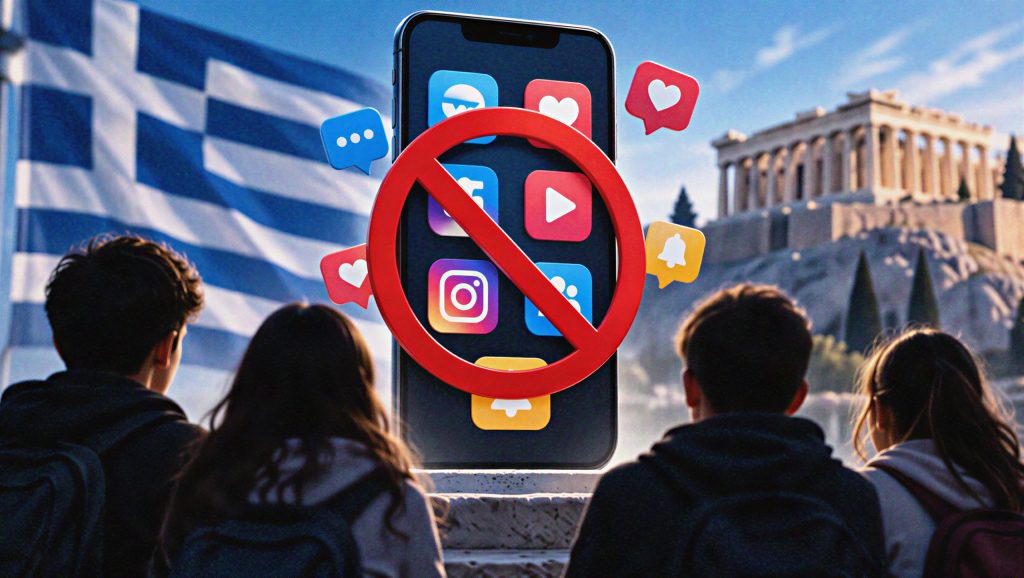
Greece has become one of the first EU countries to ban social media for children under 15. The law was passed in October 2026 and takes effect on January 1, 2027. It is part of a growing global push to protect minors from digital addiction, following similar moves in Australia and more than 20 other countries.
What the law does
The ban blocks children under 15 from accessing social networking services, including major platforms such as Facebook, Instagram, TikTok and LinkedIn. It applies to any service that qualifies as “social media,” not just a fixed list of apps. Existing accounts are not exempt: accounts created before the rules take effect must still comply with the age limit. There is no parental-consent override, and no special “restricted accounts” for 13- to 15-year-olds.
Platforms — not parents or children — are responsible for age verification. They must use “appropriate, proportionate and reliable” methods that comply with EU law. In general, users will not have to upload identity documents; a verification credential can confirm age without revealing a name, date of birth or ID number.
Platforms that fail to implement reliable age verification face fines of 6% of their previous year’s turnover — a serious deterrent.
Why Greece did it
The government argues that uncontrolled internet use is driving children into addiction at the expense of their mental health. Officials say at least one in four children is at risk of harmful content, cyberbullying and inappropriate use. Public support appears high, with surveys suggesting around 80% approval for an under-15 ban. At the same time, a majority of people doubt minors will be fully stopped from bypassing the restrictions.
Pushback
The bill passed with only the governing party’s votes. Some opposition parties abstained after proposing a narrower approach — a strict ban for under-13s and parental controls for 13- and 14-year-olds. Others voted against the blanket ban, arguing that protecting children should not mean excluding them. Free-speech advocates have also raised concerns about limiting young people’s access to online communication, and skeptics question whether age verification can actually keep determined kids off the apps. Similar bans in other EU countries have faced legal challenges.
The bigger picture
Greece’s move adds momentum to a wider European effort. The EU Commission has proposed an EU Kids Act that would ban social media for children under 13 across all member states. Greece’s age-verification app is already being positioned as a model that follows European technical specifications. Whether the ban survives legal challenges and actually keeps under-15s off the apps remains to be seen — but Greece has sent a clear message that it is not waiting for a perfect EU-wide solution.